Silence the city’s hum. High above the plateau lies a secret garden of hammered emerald and ancient bells. Discover Wonchi: the alpine escape your soul is searching for.
If you live in Addis Ababa, you know the hum. It is a constant, electric vibration of construction, coffee machines, blue taxis, and altitude. It is the sound of a city sprinting toward the future. It is exhilarating. But sometimes, you need the hum to stop. You need silence.
You don't need a flight to Bahir Dar or a week off work to find it. You need to look west, past the chaotic traffic of Gefersa, past the flower farms of Holeta, to a place that feels less like Ethiopia and more like a secret garden suspended in the sky.
This is Wonchi Crater Lake. And if you haven’t been since the road was fixed, you are missing the most accessible alpine escape in the country. Wonchi is particularly special for me, that’s where my dad was born and grew up playing on the beautiful hills and canoeing on the lake.
The Geography of Silence
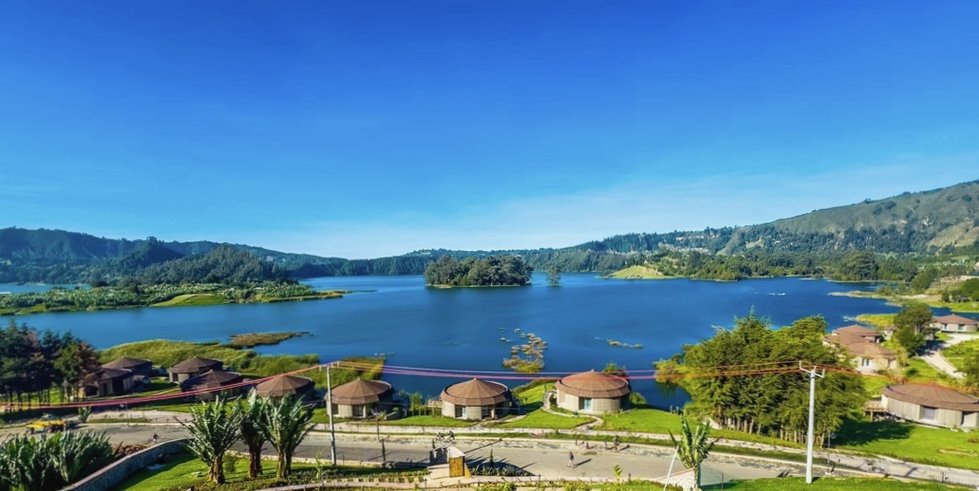
Wonchi isn't just a lake; it is a geological memory. Millions of years ago, the earth here was violent. The Tertiary period saw massive volcanic upheavals that reshaped the Shewa plateau. Today, that violence has healed into a lush, green scar. The volcano collapsed inward, creating a caldera—a massive bowl four kilometers wide—that filled with water, mineral springs, and forests.
When you arrive at the rim, you are standing at nearly 3,400 meters (11,000 feet). The air hits you differently here. It is thin, sharp, and smells of damp earth and eucalyptus. When you look down, the lake doesn't look like water. It looks like a sheet of hammered emerald, still and heavy.
This is the "Switzerland of Africa," or so the guidebooks say. But that comparison is lazy. Switzerland doesn't have Enset (false banana) trees quilting the hillsides in vibrant geometric patterns. Switzerland doesn't have the smell of roasting barley drifting from the tukuls of Oromo farmers. This is distinctly, beautifully Ethiopian.
Hooves or Boots?
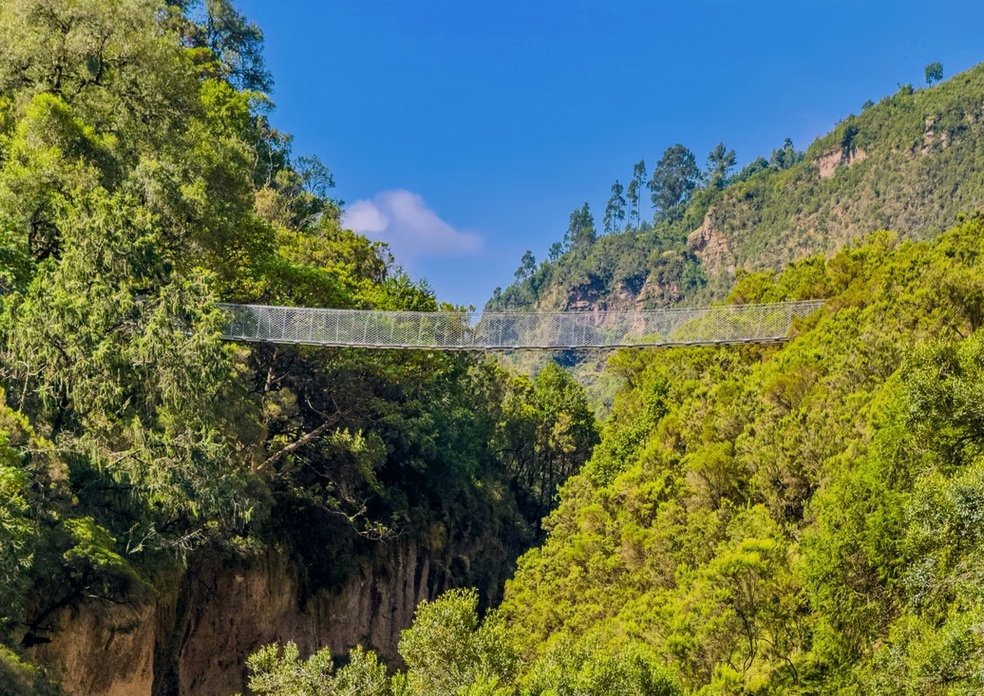
Getting to the water is half the experience. The road ends at the rim, leaving you with two choices to descend the four kilometers to the lakeshore: your feet or a horse.
If you are fit, walk. The trail winds through small hamlets where life moves at the speed of the seasons. You will pass farmers tilling soil at a 45-degree angle, defying gravity with oxen and wooden plows. You will be passed by children running up the slope who will beat you to the bottom without breaking a sweat.
But for many, the horse is the charm of Wonchi. The local youth association runs a tightly organized cooperative. For a few hundred Birr, you get a pony and a handler. It isn't equestrian dressage. It is a rugged, rhythmic sway down a dusty path, trusting a small, sturdy horse that knows every loose stone on the trail. Trust the horse. It has done this walk a thousand times.
The Island of the Bell
Once you reach the shore, the silence takes over. The water is glassy and incredibly clean—some say the cleanest in Ethiopia. Here, you trade the horse for a boat.
The destination is the island of Cherkos (Kirkos). Hidden within a grove of trees on this islet is the Cherkos Monastery. Legend says it was founded by St. Tekle Haymanot, the "Flying Saint" of the Ethiopian Orthodox tradition. The story goes that he prayed so fervently his leg fell off, and God granted him wings.
Inside the monastery, there is a bell—the "Gondar Bell." It is said to be a gift from Emperor Fasilides himself, the man who built the castles of Gondar. It is a strange, beautiful thought: a heavy bronze bell carried hundreds of kilometers from the imperial north, across mountains and gorges, to ring in this quiet volcanic bowl. It ties the history of the north to the heart of Oromia.
The New Luxury
For years, Wonchi was a "bring your own tent" destination. The road was rough, and the amenities were basic. That has changed.
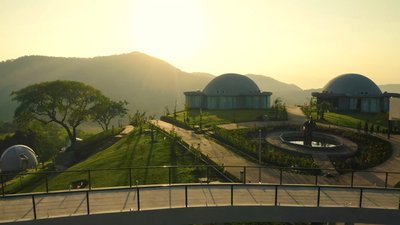
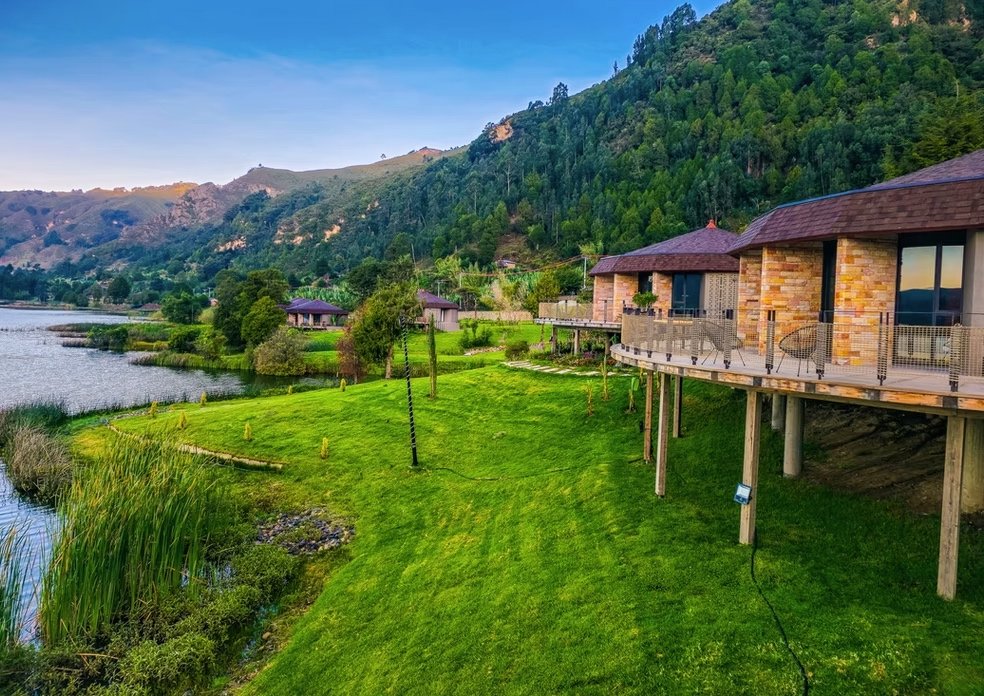
Under the "Dine for Generations" initiative, the area has transformed. The new Wanchi Ija Eco Lodge, managed by Ethiopian Skylight Hotel, has brought 5-star comfort to the crater rim. We are talking high-end luxury Tukuls, spa treatments, and a restaurant that serves a perfect macchiato with a view of the caldera.
This shift is significant. It means Wonchi is no longer just a rugged day trip for the adventurous. It is a weekend retreat. It is a place where you can hike all day and sleep in luxury linens at night. It bridges the gap between the raw beauty of the countryside and the comfort we often crave after a long week in the city.
Practical Guide: How to Go
The Drive:
Take the Ambo road west from Addis. It’s about 155km. Leave early—6:00 AM is best—to beat the factory traffic out of the city. The road to Ambo is paved. The final stretch to Wonchi, once a bone-rattling gravel track, has seen major upgrades. A standard SUV handles it easily.
The Cost:
- Entrance: A modest fee is paid at the community tourism office.
- Horses & Boats: Expect to pay between 200-400 Birr for a horse and similar for a boat. Bring cash. Small notes are best.
- Guides: Hiring a local guide is mandatory and highly recommended. They know the stories, the birds, and the people.
What to Bring:
- A Jacket: It is cold at the top. You will need layers.
- Sunscreen: The sun is fierce at 3,000m. You will burn without realizing it.
- Good Shoes: Even if you ride a horse, the ground is uneven.
Wonchi is the bridge between the urban rush of Addis and the ancient, quiet pulse of the Ethiopian highlands. It is waiting for you.