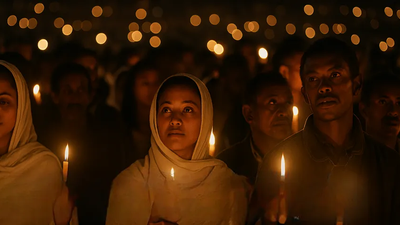

February 6-8, 2026: Legends who survived the Derg regime. A pianist who plays dub reggae at dawn. Peacocks wandering through gardens where emperors once hosted dignitaries. The Ghion Hotel transforms into Swinging Addis for three nights of Ethio-jazz that'll rewrite your understanding of what jazz can be. Complete insider's guide: lineup breakdown, after-party secrets, ticket hacks, and why this festival matters more than Coachella ever will.
In the high-altitude air of Addis Ababa, sound travels differently. It is thinner, crisper, and carries the weight of history with a peculiar resonance that is impossible to replicate anywhere else. February 6-8, 2026, the city transforms into something it hasn't been since the 1960s: Swinging Addis. Three nights. The Ghion Hotel gardens. Legends who defined Ethio-jazz alongside a generation rewriting its rules.
This isn't background music for cocktails. This is a temporal gateway where ancient Ethiopian scales collide with American jazz, Afro-funk, and hip-hop. Where a 70-year-old keyboardist who survived the Derg regime shares a stage with a pianist who studied classical music in the morning and plays dub reggae at night.
Here's why February 2026 is the most important weekend on the East African cultural calendar.
The Venue: Why the Ghion Hotel Gardens Matter
Most festivals pick venues for capacity or convenience. The Addis Jazz Festival picked the Ghion Hotel for its ghosts.
Located near Meskel Square in the heart of the city, the Ghion is a mid-century relic that refuses to modernize. While new international chains offer sterile luxury, the Ghion offers peacocks wandering through lush gardens. Ancient trees. A walled compound that feels like stepping back sixty years.
This is where Dr. Mulatu Astatke—the father of Ethio-jazz—held residency at the African Jazz Village club. Where he experimented with Latin percussion and Ethiopian modes. Where he mentored the generation that would define the sound.
The festival happens outdoors in these gardens. No concrete walls. No indoor echo that muddies the complex polyrhythms. The stage sits against dense foliage. Music drifts through cool evening air. When the sun sets and lights illuminate the trees, you're standing on the same ground where emperors once hosted foreign dignitaries.
The acoustics are perfect. The atmosphere is nostalgic without being precious. And it's the rare space in Addis where diplomats, NGO workers, local artists, and middle-class Ethiopians mix freely without the city's usual social stratification.
What this means practically: Arrive early. The lawn fills fast. VIP gets you chairs and faster bar service—worth it if you don't want to stand for four hours. But the general admission vibe is better. You can wander. Move closer for artists you love. Drift to the food stalls when you need a break.
The Ghion isn't trying to be Coachella. It's trying to be what it's always been: a sanctuary where sound matters more than spectacle.
The Legends: Dawit Yifru and Kuku Sebsebe
Dawit Yifru: The man who saved Ethiopian music with synthesizers
When the 1974 revolution came, the imperial orchestras disbanded. The big brass bands of the Golden Era—gone. The infrastructure that supported professional musicians—destroyed.
Dawit Yifru adapted.
As keyboardist for the Roha Band, he pioneered the use of synthesizers to replicate what horn sections used to do. Not cheap imitations. Complex, layered compositions that created a new aesthetic. His arrangements dominated the cassette era—the underground economy of music during the Derg regime when official channels were controlled.
Now 70-something, Dawit performs material from his solo instrumental albums. His violin playing—a rarity in Ethio-jazz—showcases the Tizita and Bati modes. Melancholic. Patient. The kind of music that doesn't demand your attention; it earns it slowly until you realize you've been holding your breath.
His set Friday night (Feb 6) is the emotional anchor. This is deep, hypnotic Ethio-jazz that rewards close listening.
Kuku Sebsebe: The voice that survived everything
Kuku started performing in the 1980s. She's still here. Still relevant. Still vital.
She's a master of Tizita—the Ethiopian equivalent of the blues. A cultural concept of nostalgia, loss, bittersweet memory embedded in a musical scale. Her voice has the grit to convey it authentically.
But unlike traditionalists who perform with just the krar (lyre) and masinqo (fiddle), Kuku's sound is urban. Synthesizers. Drum machines. Occasional electric guitar. She bridges the gap between traditional Azmari vocal styles and modern production without compromising either.
Her 2025 album Dejazmach features songwriting by Teddy Afro—the biggest pop star in modern Ethiopia. That collaboration alone tells you where she sits in the hierarchy.
The Supergroup Moment: Dawit Yifru ft. Kuku Sebsebe
Friday night. Headliner slot.
Dawit's lush keyboard arrangements. Kuku's piercing, emotive vocals. They'll reimagine the hits of the 80s with the fidelity of modern sound systems.
This is the set that justifies the ticket price alone.
The New Guard: Samuel Yirga and the Genre Destroyers
If Dawit and Kuku are the roots, Samuel Yirga is the fruit—strange, potent, undeniably new.
Samuel Yirga: The pianist who refuses categories
Yirga graduated from the Yared School of Music with classical training. Then joined Dub Colossus, fusing Ethiopian roots with UK dub and reggae. Then played in the Nubian Arc funk band.
His debut album Guzo ("Journey") mixes traditional azmari music, Ethio-jazz, dub, reggae, jazz, Latin, and classical. Critics compare him to Keith Jarrett for vitality and Abdullah Ibrahim for fluency. But Yirga doesn't sound like either.
He sounds like Addis Ababa in 2026—cosmopolitan, restless, impossible to pin down.
On stage, he's a force. Sunday night (Feb 8), expect the highest-energy performance of the festival. He reworks vintage tracks like Rotary Connection's "I Am the Black Gold of the Sun" into rhythmic behemoths. This isn't background jazz. This is physical, confrontational, joyous music.
Jemberu Demeke: When hip-hop met Ethio-jazz
Saturday features Jemberu Demeke—the prodigy who fused Ethio-jazz with hip-hop.
"Ethio-Hop" involves sampling classic jazz records or playing live jazz loops over boom-bap drums with Amharic flow. It's the sound of taxi minibus speakers. Youth clubs. Modern Addis.
Kaÿn Lab: The instrumentalists
Friday evening opens with Kaÿn Lab—an instrumental collective known for extended improvisations. They're staples at Fendika Cultural Center. The "musician's musicians" of the festival.
Expect intricate interplay exploring the four main kinit (Ethiopian scales). Technical brilliance for jazz purists.
The Three-Day Schedule: What to Prioritize
Friday, February 6:
- 4:00 PM – Doors open
- 5:00 PM – Tigray Cultural Group (traditional opening—don't miss this)
- 6:20 PM – Kaÿn Lab (instrumental Ethio-jazz)
- 7:30 PM – Mapei (Sweden/USA soul)
- 9:00 PM – Dawit Yifru ft. Kuku Sebsebe (HEADLINER)
Saturday, February 7:
- 2:00 PM – Doors open
- 3:00 PM – Tigray Cultural Group
- 4:30 PM – Bereket Abebe (saxophone jazz)
- 6:00 PM – Mapei
- 7:30 PM – Winyo (Kenya - Benga/Afro-soul)
- 9:00 PM – Jemberu Demeke (Ethio-hop fusion)
- Late – DJ Jazzy Dave
Sunday, February 8:
- 2:00 PM – Doors open
- 3:00 PM – Tigray Cultural Group
- 4:30 PM – HaddinQo with Desta Groove (masinqo fusion)
- 6:00 PM – Samuel Yirga (PRIORITY - piano fusion)
- 7:30 PM – Stewart Sukuma & Banda Nkhuvu (Mozambique)
- 9:00 PM – Roha Band ft. Fikeraddis Nekatibeb (legends reunion)
- Late – DJ Eat Ethio
Insider tip: The Tigray Cultural Group opens each day with traditional Tigrigna music and dance. The shoulder-shaking eskista grounds everything in Ethiopian tradition before the experimentation begins. Don't skip it because you're late.
Tickets, QR Codes, and Not Getting Scammed
The festival uses Chapa—Ethiopia's prominent payment gateway—for ticketing.
Pricing:
- Standard day ticket: 600 ETB (~$5-6 USD)
- VIP: 800-1,500 ETB depending on tier
- All-days pass: Discounted (buy this if you're attending 2+ days)
Is VIP worth it? At the Ghion, VIP gets you chairs closer to the stage and dedicated bar service. General admission is lawn seating—you stand or sit on grass. If you're fine with that, save your money. If you want guaranteed seating and faster drinks, upgrade.
The QR code survival guide:
- Buy tickets at chapa.events or the Chapa app in advance
- The moment your QR code appears, screenshot it
- Do not rely on opening email or the app at the gate
- Network congestion around Meskel Square during events kills 4G/LTE
- Have your screenshot ready with phone brightness up
- Security does pat-downs (standard for all Addis hotels)
After the Festival: Where the Real Music Happens
The festival ends around midnight. For the serious pilgrim, that's when the night begins.
Fendika Cultural Center: The after-party headquarters
If the Ghion is a sanctuary, Fendika is a church.
Located in Kazanchis neighborhood, this is the spiritual home of Addis' artistic community. Owner Melaku Belay is a world-renowned dancer and cultural ambassador. The space is an Azmari bet (traditional minstrel house) evolved into a global jazz hub.
Walls covered in art. Small, crowded, bursting with energy.
After the main stage closes at the Ghion, musicians migrate here for impromptu jam sessions. This is where you might see Kaÿn Lab members or international guests like Mapei jamming with traditional masinqo players until 4 AM.
Entry: Free or cheap (100-200 ETB). Expect to stand. Expect to be packed in. Expect magic.
The African Jazz Village
Located inside the Ghion Hotel compound, this club offers a more sedate after-party. If you're tired, retreat here. Keep listening to high-quality music in a seated environment. It's the Blue Note of Addis—sophisticated, historical, focused purely on sound.
Survival Logistics: Safety, Transport, and What to Wear
Transportation after dark
Do not walk between venues at night. Even short distances.
Use RIDE (yellow/green cars) or Feres. These are ride-hailing apps—safe, tracked, transparent pricing. Download both before you arrive.
Avoid random blue Lada taxis on the street unless you speak fluent Amharic. Foreigners get quoted 2,500 ETB for rides that should cost 300 ETB.
Dress code
Addis is conservative with a stylish edge. Smart casual is the rule.
Men: Long trousers mandatory for evening. Shorts are viewed as childish or disrespectful in nightlife settings.
Women: Modern fashion is acceptable, but slightly conservative dress avoids unwanted attention when moving between venues.
Everyone: Bring a warm jacket. Addis sits at 2,355 meters (7,726 feet) elevation. February nights drop to 10°C (50°F). The outdoor Ghion gardens get cold after sunset.
Security
The Ghion is safe with professional security. But standard precautions apply:
- Don't flash expensive jewelry or cameras unnecessarily
- Keep valuables in inside pockets
- Travel in groups when moving between venues
- Use hotel safes for passports and excess cash
Why This Festival Matters Beyond the Music
The Addis Jazz Festival is Ethiopia's soft power in action.
In a region defined by geopolitical complexity, music remains the country's most potent diplomat. This festival brings together past, present, and future of a genre that's uniquely Ethiopian yet universally understood.
From Dawit Yifru's violin-led nostalgia to Kuku Sebsebe's synthesizer grooves to Samuel Yirga's genre-defying experiments, you're getting a comprehensive survey of Ethiopian sonic identity.
For travelers, expats, and locals, standing in the Ghion gardens under the February sky isn't just listening. It's witnessing history being written, one pentatonic scale at a time.
The Insider's Final Word
Buy the all-days pass. Download the RIDE app. Bring a jacket. Screenshot your QR codes. Don't skip the Tigray Cultural Group. Go to Fendika afterward even if you're tired.
And prepare to have your understanding of jazz fundamentally altered.
Welcome to Swinging Addis.