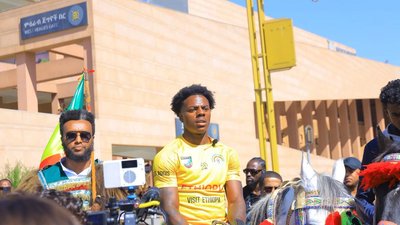
While the world retreats into secularism, Ethiopia remains a fortress of ancient Christianity. Discover Ethiopian Easter (Fasika): the 55-day fast, sacred vigils, and the tectonic plate of the nation's spiritual year.
In the vast, undulating landscapes of the Ethiopian plateau, time is not merely a linear progression of seconds and minutes but a cyclical journey of spiritual depletion and replenishment. This rhythm is nowhere more palpable than in the observance of Fasika, the Ethiopian Orthodox celebration of Easter. Unlike the Western observation, which often centers on a singular Sunday of confectionary indulgence and cursory church attendance, Fasika represents the culmination of a rigorous, fifty-five-day theological and physiological odyssey known as Abiy Tsom (Great Lent). It is a phenomenon that transcends the boundaries of a mere religious holiday, functioning instead as a comprehensive socio-cultural reset for millions of faithful across the Horn of Africa.
For the cultural observer, Fasika offers a unique lens through which to view the Ethiopian soul. It is a synthesis of ancient Judeo-Christian traditions that predate the Roman canon, preserved in the high-altitude isolation of the mountains, and a vibrant, living expression of communal resilience. The transition from the somber, vegan austerity of the Lenten fast to the explosive, carnivorous joy of Easter morning is not just a change in diet; it is a reenactment of the Resurrection itself, felt in the very bodies of the believers. This report provides an exhaustive analysis of this celebration, dissecting the intricate architecture of the fast, the sonic theology of Saint Yared’s chants, the distinct geographical manifestations of the vigil in Addis Ababa, Lalibela, and Axum, and the material culture that clothes this ancient faith in the twenty-first century. As the Ethiopian Orthodox Tewahedo Church (EOTC) prepares for the 2025 celebration—slated for April 12 according to the Julian reckoning—understanding these deep structures becomes essential for any traveler or scholar attempting to grasp the magnitude of the event.
The Architecture of Abstinence: Abiy Tsom and the Theology of Denial
To understand the feast, one must first traverse the desert of the fast. The journey toward Fasika is paved with the fifty-five days of Abiy Tsom, a period that serves as the spiritual and physiological foundation of the holiday. This duration, significantly longer than the forty-day Lent observed in Western Christianity, is not an arbitrary extension but a complex composite of historical commemoration and liturgical necessity.
The Three Pillars of the Fifty-Five Days
The temporal structure of the fast is built upon three distinct theological pillars, each adding layers of meaning to the believer's experience. The uninitiated often assume the fast is a monolithic block of time, but the Ethiopian liturgical calendar divides it into specific phases that guide the faithful through a narrative arc of history and salvation.
The first phase, Tsome Hirkal (The Fast of Heraclius), occupies the first week of the Lenten period. This addition is a fascinating example of historical intertextuality within the Ethiopian tradition. It commemorates the Byzantine Emperor Heraclius, who, in the 7th century, campaigned against the Persians to recover the True Cross which had been stolen from Jerusalem. According to EOTC tradition, after his victory, Heraclius requested the Christians of Jerusalem to fast for him for one week as a spiritual offering for the lives lost and the grace granted during the war. The Ethiopian Church, maintaining its deep, ancient connection to the See of Saint Mark and the Holy Land, adopted this week into its own canon, placing it at the forefront of the Lenten season. Thus, the Ethiopian believer begins their journey to Easter not with Christ in the wilderness, but with a 7th-century Byzantine emperor, linking their local faith to the grand sweep of global Christian history.
Following this preparatory week is Tsome Arba, the core forty days that mirror the fasting of Jesus Christ in the desert. This period aligns with the synoptic gospels (Luke 4:1-2), where Christ fasted for forty days and nights while being tempted by the devil.4 However, the mathematics of the Ethiopian fast contains a unique theological calculation regarding weekends. In the EOTC tradition, fasting—defined as total abstention from food until the afternoon—is forbidden on Saturdays and Sundays (with the exception of Holy Saturday). To account for these "eating days" where the intensity of the fast is relaxed (though animal products remain prohibited), the church adds an additional period to ensure the full forty days of rigorous fasting are achieved.6 This logic of substitution highlights the legalistic precision with which the fast is constructed; it is a spiritual contract that must be fulfilled to the letter.
The final crescendo is Tsome Himamat (Passion Week), the seven days leading directly to Easter Sunday. This week is treated as a separate entity from the preceding weeks, characterized by an intensification of sorrow and restriction. It commemorates the Passion of Christ: his arrival in Jerusalem, his suffering, crucifixion, and burial. During this week, the rhythm of life in Ethiopia slows to a near-halt. The faithful stop greeting each other with the customary kisses, symbolizing the betrayal of Judas, and the church services become longer, more somber, and physically demanding.
The Physiological Regime and Social Impact
The rules of Abiy Tsom are strictly strictly enforced for all followers over the age of thirteen, creating a unified physiological state across the nation.7 The diet is strictly vegan: no meat, no dairy, no eggs, and no animal fats. The cuisine shifts entirely to plant-based sustenance, relying on pulses, lentils, split peas, and vegetables, all scooped up with injera made from teff.
But the restriction goes deeper than ingredients; it controls the clock. The faithful must abstain from all food and water until the ninth hour of the day (3:00 PM), the biblical hour associated with the death of Christ on the cross. This means that for nearly two months, millions of Ethiopians operate on a calorie-restricted, time-restricted feeding schedule. This collective hunger creates a heightened sense of spiritual awareness and community cohesion. When the clock strikes three, the shared meal becomes a daily mini-celebration of endurance.
The intensity reaches its peak during the final three days of Passion Week. From Good Friday (Siklet) through Easter Sunday morning, many devout Christians engage in a total fast, abstaining from any oral intake, including water. This profound physical denial is intended to bring the believer as close as possible to the state of death, making the resurrection feast not just a symbol, but a biological necessity for survival.
This physiological landscape has tangible effects on the country's socio-economic fabric. Butcher shops, usually the bustling hubs of Ethiopian neighborhoods, often close their doors or see business dwindle to a trickle. Restaurants tape "Fasting Food Available" signs to their windows, and the price of vegetables and lentils fluctuates in response to the massive shift in demand. The entire nation breathes in a different rhythm, holding its breath for the release of Fasika.
The Sonic Theology: Saint Yared and the Landscape of Zema
If the fast provides the physical structure of Fasika, the music provides its emotional and theological texture. The Ethiopian Easter experience is inseparable from Zema, the indigenous liturgical chant system that has defined the auditory landscape of the Ethiopian highlands for a millennium and a half.
The Legacy of Saint Yared
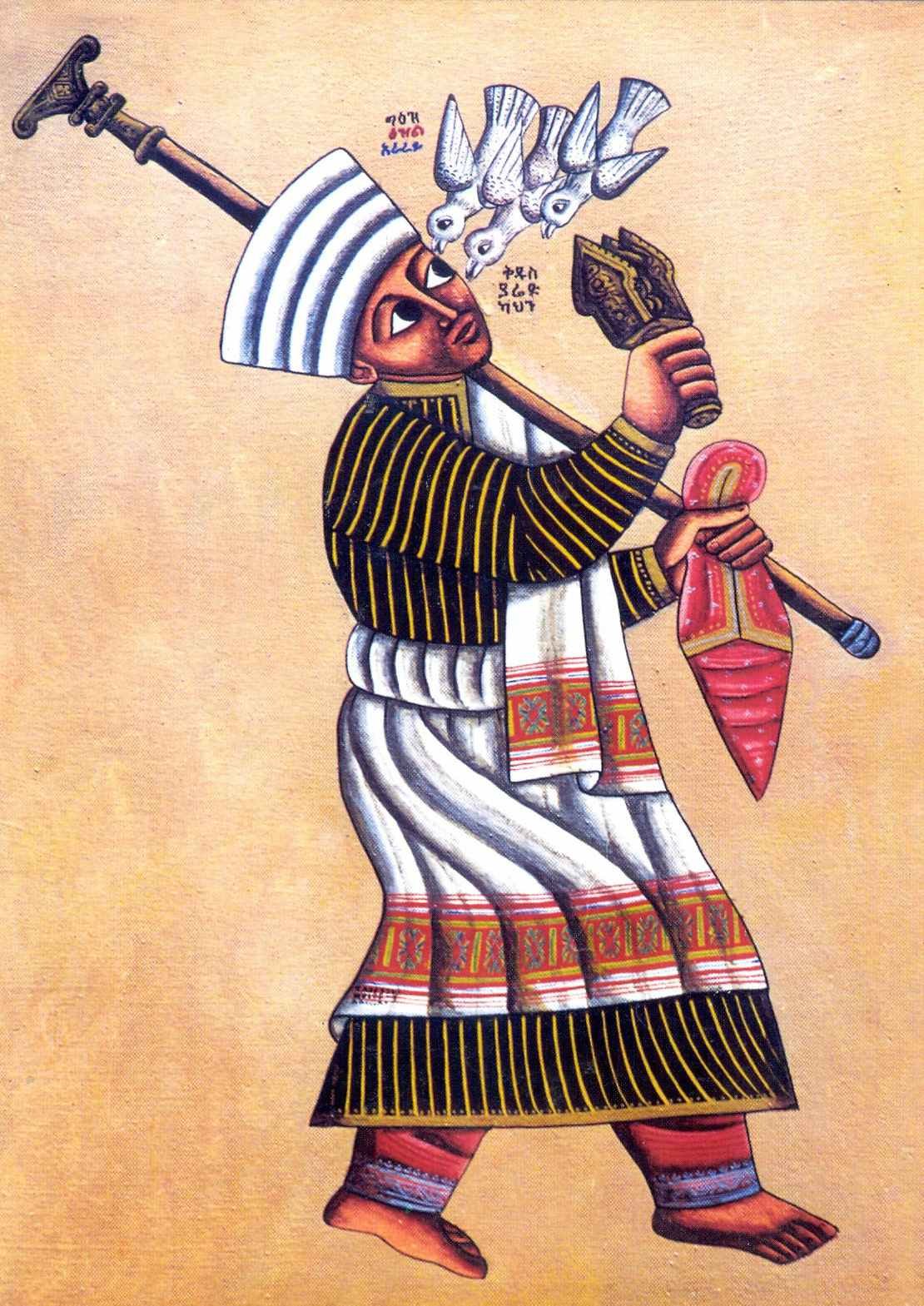
The entire musical edifice of the Ethiopian Church is attributed to a single, monumental figure: Saint Yared. Living in the 6th century during the reign of Emperor Gebre Mesqel, Yared is the father of Ethiopian ethnomusicology. Tradition holds that he was divinely inspired to create the chant system after witnessing three birds singing in heaven, their voices intertwining to represent the Holy Trinity.
Yared’s contribution was not merely melodic but structural. He invented a unique system of musical notation known as melekket, utilizing distinct signs and symbols to guide the chanter through complex melismatic passages. These signs, still used today in the ancient Deggwa hymnbooks, allow for the preservation of a musical tradition that has remained largely unchanged since the Aksumite era. For the season of Lent, Yared composed the Tsome Digua (Hymns of Fasting), a specific volume of chants that captures the somber, penitential mood of the season. Each Sunday of the Great Fast is named after a specific hymn from this book—Zewerede (He who came down), Qidist (Holy), Mikura (Temple)—organizing the passage of time through song.
The Three Modes of the Trinity
The Yaredic system is built upon three musical modes, or kignit, which are employed to evoke specific emotional and theological states. During the Easter vigil, the interplay of these modes creates a dynamic narrative of redemption.
- Ge'ez: The first mode is the foundational, heavy chant. It is the "hard" voice, solemn and dry, often used for the daily reading of scripture and the ordinary liturgy. It represents the Father and the grounded reality of the law.
- Ezel: The second mode is the "mournful" voice. Soft, flowing, and deeply melancholic, Ezel is the soundtrack of Lent. It is the mode of the Passion, used during funerals and the sorrowful vigils of Good Friday. Its sliding, minor-key tonalities evoke the suffering of Christ and the weeping of the Marys at the tomb.
Araray: The third mode is the "joyful" voice. It is light, complex, and high-pitched, symbolizing the Holy Spirit and the Resurrection. When the priest announces Christos Tensa'e (Christ is Risen) in the early hours of Sunday morning, the chant shifts into Araray, lifting the congregation from the heaviness of Ezel into a state of ecstatic jubilation.
The Organology of the Vigil
The performance of Zema is not an a cappella affair; it is driven by a trinity of sacred instruments that create a trance-like, rhythmic environment during the long night vigils.
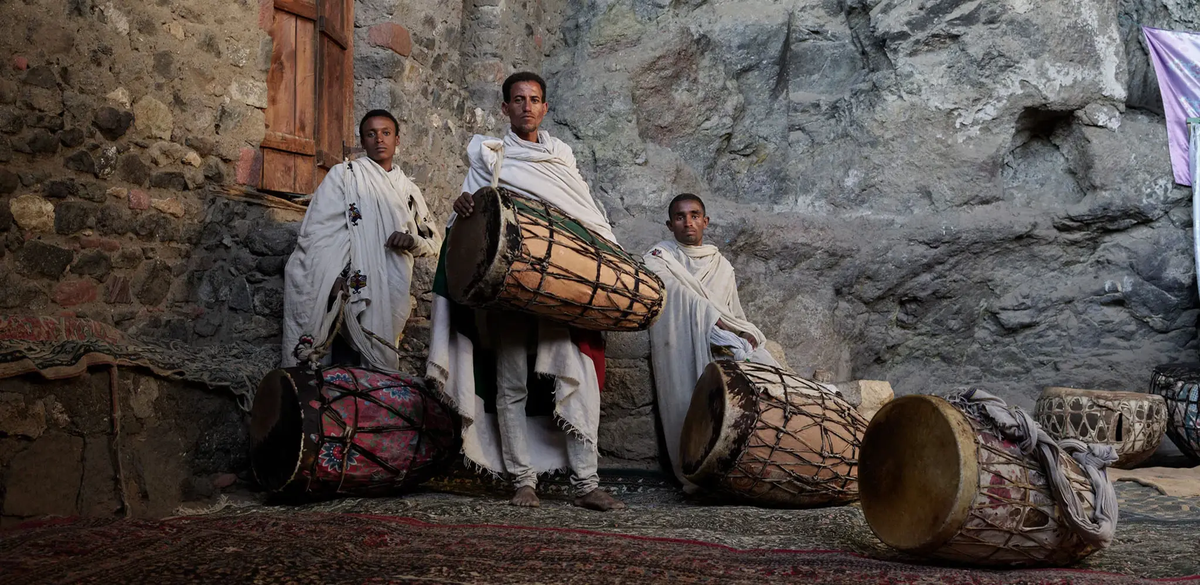
The Kebero (The Heartbeat): The most physically imposing instrument is the Kebero, a large, double-headed conical drum carved from a hollowed tree trunk. The acoustics of the Kebero are designed to produce a deep, resonating rumble that can be felt in the floorboards of the church. Its symbolism is explicitly Christological: the larger end represents the divinity of Christ, infinite and booming, while the smaller end represents his humanity. The leather straps lacing the hide symbolize the scourging Jesus received during the Passion.11 During the Easter mass, the Kebero dictates the tempo of the chant, moving from a slow, thudding heartbeat during the Lenten prayers to a frantic, joyous rhythm as the Resurrection is proclaimed.
The Sistrum (The Celestial Rattle): Counterbalancing the low frequency of the drum is the Tsanatsel or sistrum. This metal rattle, consisting of a handle and a U-shaped frame with metal disks, produces a shimmering, jingling sound. It is shaken by the Debteras (cantors) to maintain the micro-rhythms of the chant. The sound is said to mimic the rustling of angels' wings or the joyful noise of the biblical harp, adding a layer of celestial texture to the heavy earthly thud of the drum.
The Meqwamiya (The Staff of Endurance): Perhaps the most practical of all liturgical objects is the Meqwamiya, a T-shaped prayer stick. While it serves as a percussion instrument—lifted and stamped on the floor to accentuate the beat in a practice called eqqwaqwam (liturgical dance)—its primary function is physical support. The Easter vigil lasts for hours, often from dusk until dawn, and the Ethiopian rite requires standing. The Meqwamiya acts as a crutch, allowing the clergy and faithful to lean and rest while remaining upright. It is a tool of endurance, symbolizing the staff of Moses and the cross of Christ, supporting the body as the spirit travels through the night.
The Geography of Faith: Three Epicenters of the Resurrection
While Fasika is a national event, celebrated in every village and diaspora community, three locations in Ethiopia offer distinct, heightened manifestations of the holiday. Addis Ababa, Lalibela, and Axum each provide a different lens—urban, monolithic, and ancient—through which to witness the miracle of the Resurrection
Addis Ababa: The Urban Cathedral Experience
In the capital city, Fasika is a massive, diverse convergence of the ancient and the modern. The epicenter of the celebration is the Holy Trinity Cathedral (Kidist Selassie), the final resting place of Emperor Haile Selassie and the highest-ranking Orthodox cathedral in the city.
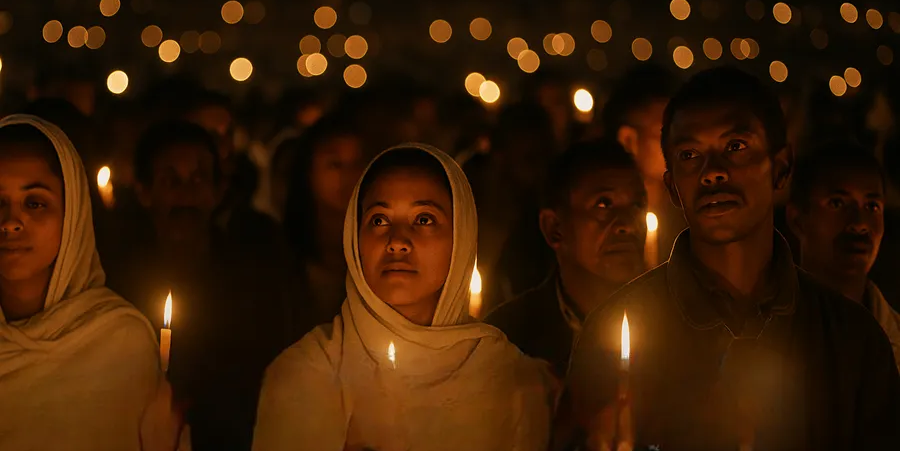
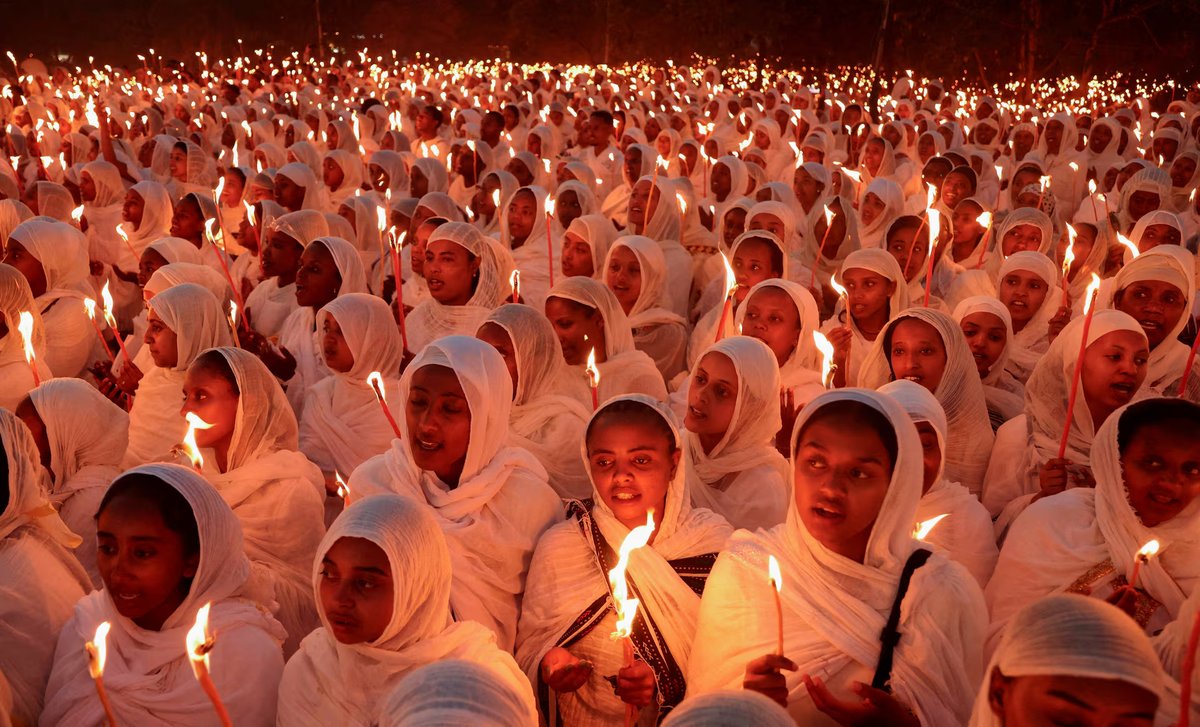
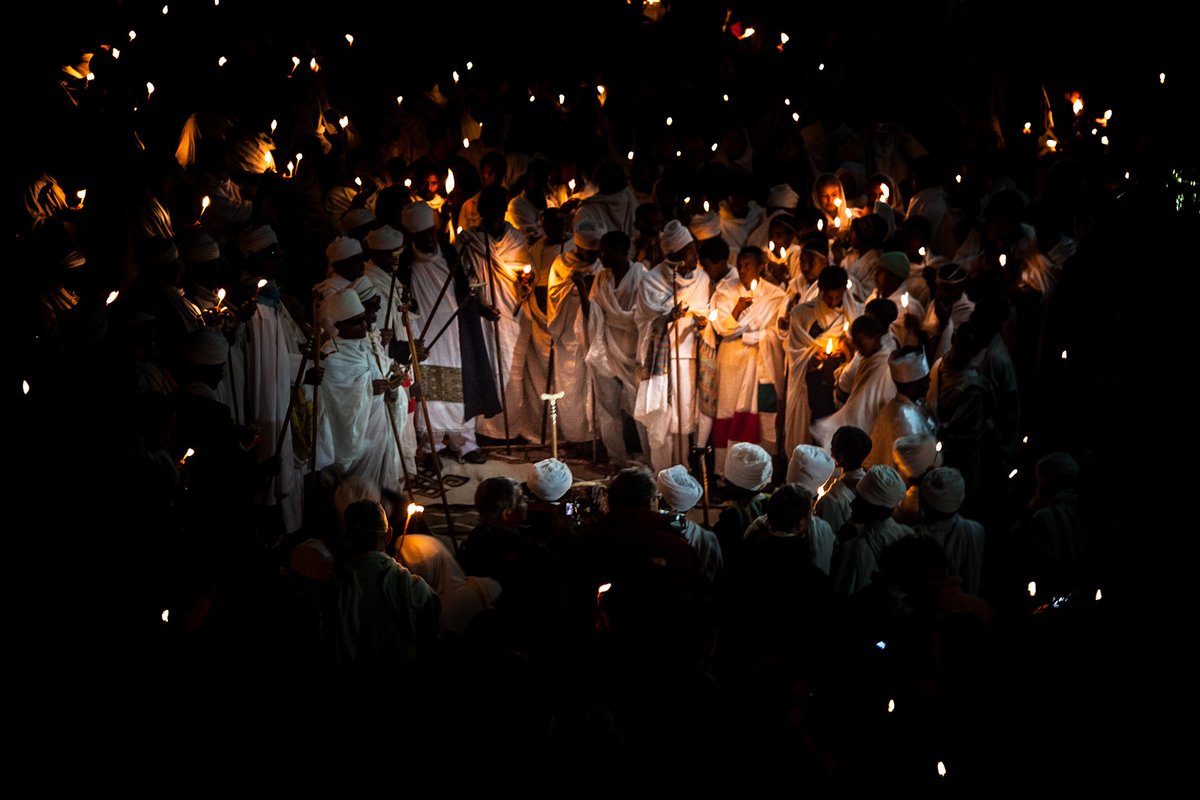
The Midnight Vigil: On Easter Eve, the atmosphere in Addis Ababa is electric. The cathedral grounds, and the streets radiating from them, become a sea of white. Thousands of worshippers, draped in the traditional white cotton Netela or Gabi, gather for the midnight mass. The crowd is so dense that movement is impossible; one simply sways with the collective body of the faithful. The air is thick with the blue smoke of frankincense and the murmuring of thousands of prayers. Inside the cathedral, the Patriarch of the Ethiopian Orthodox Tewahedo Church often presides over the service, washing the feet of the clergy on Holy Thursday in a reenactment of the Last Supper, and leading the proclamation of the Resurrection on Sunday morning.
The Urban Juxtaposition: What makes the Addis experience unique is the context. Just outside the church gates, the city is undergoing a rapid modernization. The fountains of Piassa may be illuminated with LED lights and dancing water shows, creating a stark contrast between the neon modernity of the capital and the candlelight of the ancient rite. The "sheep traffic jams" are a famous Addis phenomenon in the days leading up to Easter, where shepherds drive flocks of sheep and oxen through the busy intersections of Bole and Meskel Square, competing for space with taxis and diplomatic convoys. It is a city where the agrarian and the metropolitan collide in the name of the feast.
Lalibela: The Stone Jerusalem
If Addis Ababa represents the political and modern face of the church, Lalibela represents its mystical heart. The town, famous for its eleven rock-hewn churches carved in the 12th century, was designed as a "New Jerusalem" for pilgrims who could not make the dangerous journey to the Holy Land.
The Subterranean Vigil: Celebrating Easter in Lalibela is an experience of sensory immersion. The churches are not built on the earth but carved into it. During the Easter vigil, these volcanic trenches and courtyards are plunged into darkness, illuminated only by the beeswax candles held by the pilgrims. The visual effect is ethereal: thousands of white-clad figures glowing softly against the red volcanic tuff, looking like souls waiting in the underworld for the light of Christ.
The acoustics of the rock-hewn chambers are extraordinary. The chanting of the Debteras echoes off the stone walls, creating a resonant chamber that amplifies the low rumble of the Kebero drums. The faithful often sleep on the cold stone ground wrapped in their Gabis, waiting for the mass to begin, blurring the line between sleep, death, and prayer.
The Ritual of Light: While the "Demera" bonfire is central to the Meskel festival, the Easter vigil in Lalibela focuses on the transition from the "Mugad" (darkness/suffering) to the light. The lighting of the candles at midnight, as the chant shifts to Araray, is the defining moment. It signifies the Harrowing of Hell, the moment light penetrates the tomb. The physical descent into the churches and the ascent out of them mirrors the theological narrative of burial and resurrection.
Axum: The Ark and the Ancient Roots
Axum offers a celebration rooted in the deepest strata of Ethiopian history. As the alleged resting place of the Ark of the Covenant, housed in the Chapel of the Tablet next to the Church of Our Lady Mary of Zion, Axum is the holiest site in the country.
The Solemn Procession: The Easter celebration here is heavier, more solemn, and deeply connected to the Old Testament roots of the faith. The Hidar Zion festival in November is the city's largest pilgrimage, but Easter holds a specific gravity. The rituals involve elaborate processions of the Tabot (replicas of the Ark found in every Ethiopian church) wrapped in rich brocades and carried on the heads of the priests. In Axum, this procession takes on added weight due to the proximity of the "original" Ark.
The atmosphere in Axum is described as "marvelous" and archaic. The backdrop of the giant stelae (obelisks) and the ruins of the Queen of Sheba’s palace frames the Christian celebration within a narrative of ancient empire and continuity. The chanting here is often considered the most "pure" adherence to Saint Yared’s original composition, maintained by the monastic community that has guarded the site for centuries.
The Material Culture: Sensory and Economic Dimensions
Fasika is not just a spiritual event; it is a massive driver of material culture and economic activity. The holiday has a specific "look" and "smell" that permeates the country.
The White Tide: Shiro Meda and the Netela
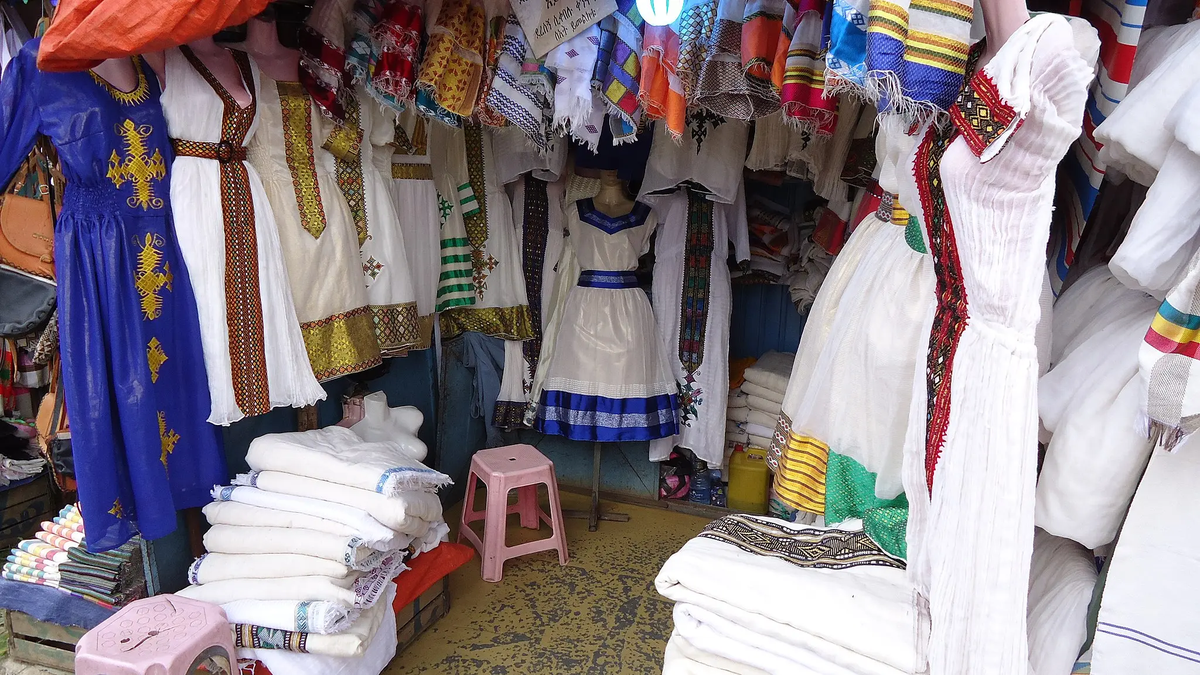
Visually, Ethiopian Easter is monochromatic: everything is white. This is due to the Netela (for women) and Gabi (for men), the traditional cotton garments worn for all religious services. These are not merely clothes but liturgical costumes that signify purity and resurrection.
The Shiro Meda Phenomenon: The epicenter of this material culture in Addis Ababa is the Shiro Meda Market. Located at the foot of the Entoto Hills, this market is the primary hub for traditional handwoven textiles. In the weeks leading up to Easter, Shiro Meda transforms into a frenetic "shopper's paradise".30 The narrow alleys are packed with thousands of shoppers bargaining for the best tibeb—the intricate, colorful embroidered borders that adorn the white cotton.
The market offers a sensory overload: the dust of the cotton, the clatter of the weavers' looms, and the intense negotiation between buyer and seller. It is a place where the economic anticipation of the holiday is most visible. Prices for high-quality Habesha Kemis (dresses) can soar, and the market becomes a barometer for the economic health of the holiday season.
The Olfactory Landscape: Frankincense and Coffee
The scent of Fasika is a complex layering of the sacred and the domestic.
Frankincense (Etan): The church services are enveloped in clouds of frankincense. Sourced largely from the Tigray region, Ethiopian frankincense (Boswellia papyrifera) has a distinct, pine-lemon profile that is sharper and fresher than Arabian varieties.34 This scent is the olfactory marker of the holy space; when one smells it, one knows they are in the presence of the divine.
Roasting Coffee (Buna): In the domestic sphere, the dominant scent is roasting coffee. The Ethiopian coffee ceremony is central to the hospitality of Easter. After the fast is broken, families gather on a floor strewn with fresh green grass (ketema) to roast green coffee beans over charcoal. The thick, smoky aroma of the darkening beans signals welcome and celebration, grounding the high theology of the church in the warmth of the home.
Breaking the Fast: The Gastronomy of Resurrection
The transition from Abiy Tsom to Fasika is a biological shock. At 3:00 AM on Easter Sunday, after the liturgy concludes, the fast is officially broken. This moment is not just about eating; it is about the restoration of life through blood and meat.
Doro Wat: The Sacrificial Stew
The undisputed king of the Easter table is Doro Wat, a spicy, slow-cooked chicken stew. It is practically mandated by culture to eat this dish on Fasika. The preparation is labor-intensive, often involving the caramelization of onions (kulet) for hours until they turn a deep, rich red-brown.
The Symbolism of the Twelve: The cutting of the chicken is a ritual in itself. Tradition dictates that the bird must be dissected into exactly 12 pieces, representing the 12 Apostles of Christ. This ensures that the meal is not just sustenance but a Eucharistic symbol shared among the family. Into this spicy red stew, hard-boiled eggs are added. The egg, ancient symbol of new life and the sealed tomb from which life emerges, is a universal Easter symbol that finds its spiciest expression here.
The Traffic of Sheep
The breaking of the fast requires blood. In the days leading up to Easter, Addis Ababa experiences its famous "sheep traffic jams." Every household that can afford it buys a sheep (or an ox for larger groups) to slaughter on Easter morning. This practice creates a surreal urban landscape where luxury SUVs share the road with shepherds herding livestock across major thoroughfares.
The feast that follows is an orgy of meat:
- Kitfo: Raw minced beef marinated in mitmita (chili powder) and niter kibbeh (spiced butter). The consumption of raw meat is a cherished luxury after 55 days of veganism.
- Tibs: Sautéed meat chunks served sizzling in clay pots.
- Dulet: A dish made from the tripe, liver, and beef of the freshly slaughtered animal.
This gastronomic explosion serves a social purpose: it binds the community. Neighbors visit neighbors, sharing Defo Dabo (huge wheels of wheat bread) and engaging in the coffee ceremony, re-knitting the social ties that might have been quieter during the introspective period of Lent.
Practical Guide for the 2026 Traveler
For the international traveler planning to witness Fasika in 2026, navigating the logistics is as important as understanding the theology.
Key Dates and Calendar
In 2026, the Ethiopian Orthodox Easter falls on Sunday, April 12. This alignment with the Eastern Orthodox calculation means it may differ from the Western Easter date.
- Good Friday (Siklet): April 10, 2026.
- Easter Sunday (Fasika): April 12, 2026.
Did you know Ethiopia has its own unique calendar? You can read about it here. Or see the full calendar here.
Travel Logistics and "The Loop"
Flights: The primary gateway is Addis Ababa Bole International Airport (ADD). A crucial tip for travelers is to book their international arrival via Ethiopian Airlines. Doing so unlocks a significant discount (often 50-60%) on all domestic flights within Ethiopia. This makes the "Historic Route" (Addis -> Bahir Dar -> Gondar -> Lalibela -> Axum) affordable and accessible.
Visas: Ethiopia offers an e-visa service for most nationalities, which is the most efficient way to enter. However, due to shifting regulations, it is vital to check the official immigration portal closer to travel dates.
Security: As of 2025, travellers must remain cognisant of the security situation in the Amhara and Tigray regions. While Lalibela and Axum are major pilgrimage sites, road travel between them can be subject to closures or checkpoints due to local instability. Flying between cities is strongly recommended over overland bus travel for safety and reliability.
Cultural Etiquette
- Dress Code: When visiting churches, especially during the vigil, modesty is paramount. Women should cover their heads, shoulders, and knees. Purchasing a Netela at Shiro Meda upon arrival is not only a great souvenir but the best way to blend in and show respect. Men should remove hats.
- Footwear: Shoes must inevitably be removed before entering the church. Slip-on shoes are practical.
Fasting Awareness: While foreigners are not expected to fast, eating meat or smoking publicly near churches during Good Friday is considered insensitive.
Best Dining for Doro Wot
For those in Addis Ababa wanting to experience the best Doro Wat without a home invitation, several cultural restaurants offer authentic experiences. Yod Abyssinia and 2000 Habesha are renowned for combining traditional food with cultural dance, providing a comprehensive introduction to the culture. For a more purely culinary focus, Kategna is widely cited by locals and expats alike for the quality of its injera and stews. See best traditional Ethiopian restaurants here.
Conclusion: The Enduring Flame
Fasika in Ethiopia is more than a holiday; it is a testament to the endurance of an ancient form of Christianity that has survived in the mountain fortresses of the Horn of Africa for nearly two millennia. It is a celebration defined by its contrasts: the silence of the fast and the roar of the feast; the darkness of the Lalibela trenches and the blinding white of the Netela; the solemnity of the Ezel chant and the joy of the Araray.
For the visitor, it offers a profound insight into the Ethiopian worldview, where the spiritual and the physical are not separate realms but deeply intertwined. The physiological rigor of the 55-day fast creates a body that is prepared to receive the joy of the Resurrection not just as a theological concept, but as a felt reality. Whether standing in the crush of the Holy Trinity Cathedral in Addis or shivering in the stone shadows of Lalibela, the witness to Fasika participates in a rhythm of redemption that is as old as the church itself.
Recommendation: For travelers seeking the most atmospheric and visually arresting experience, Lalibela remains the pinnacle. However, bookings must be made months in advance due to the massive influx of domestic pilgrims. For those seeking the beating heart of the modern nation and the grandest liturgical pomp, Addis Ababa is unmatched.